Articulate AI
AI speech feedback platform
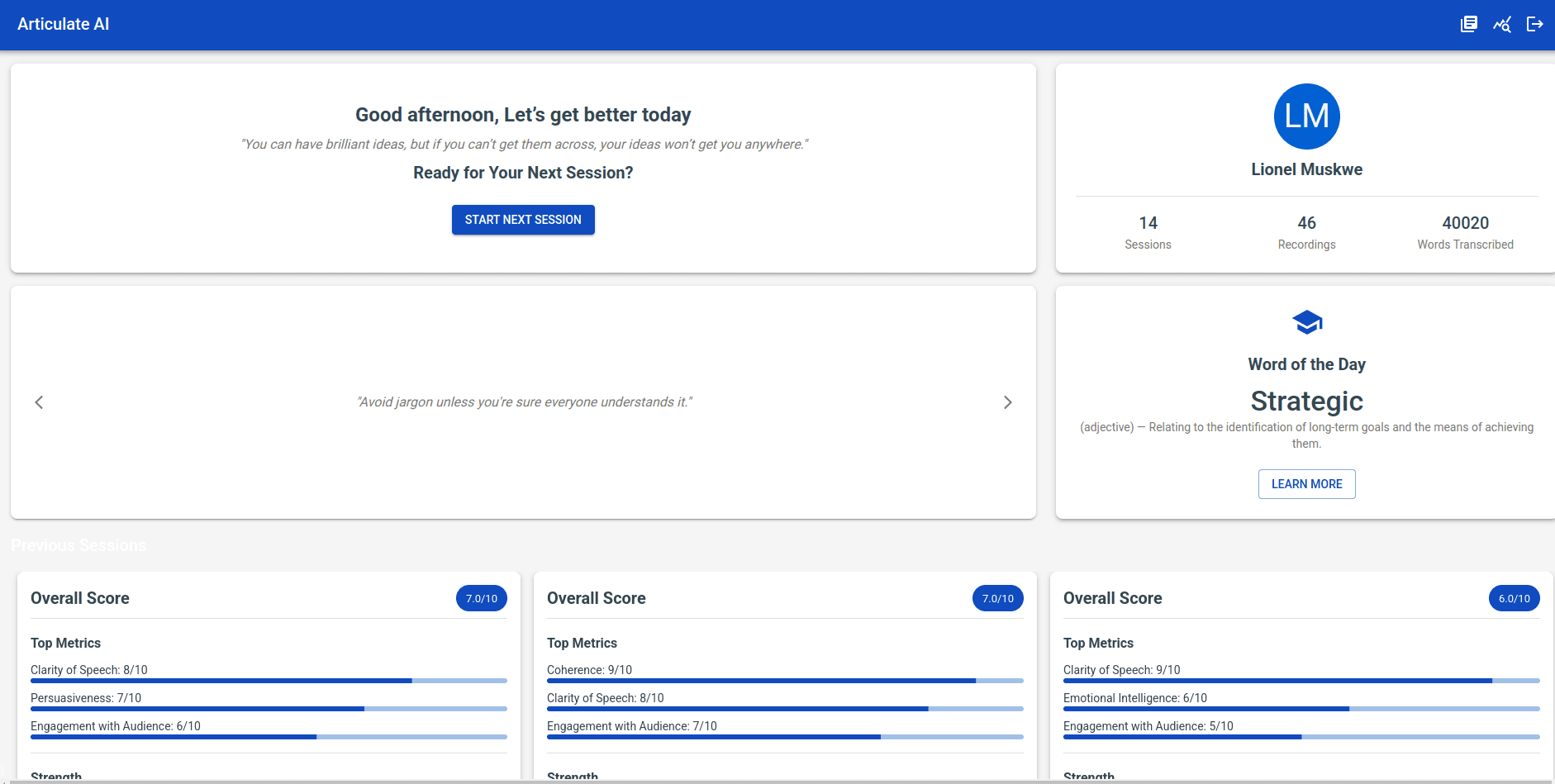
A full-stack platform that turns a recorded talk into structured coaching: Deepgram transcription plus GPT-4 rubric evaluation across pacing, clarity, tone, structure, vocabulary, sentiment, and audience engagement.
- speech dimensions scored per session
- 7
- models orchestrated per report
- 2
Role
Personal build, solo design and engineering
Stack
- React
- Django
- GPT-4
- Deepgram
- Docker
Context
Most speaking-practice tools count filler words and stop there. Useful feedback looks more like a coach: specific, rubric-based, and adapted to who you are speaking to.
Articulate AI was a personal build to close that gap, and it became the foundation for the rubric and evaluation work I now do professionally.

System design
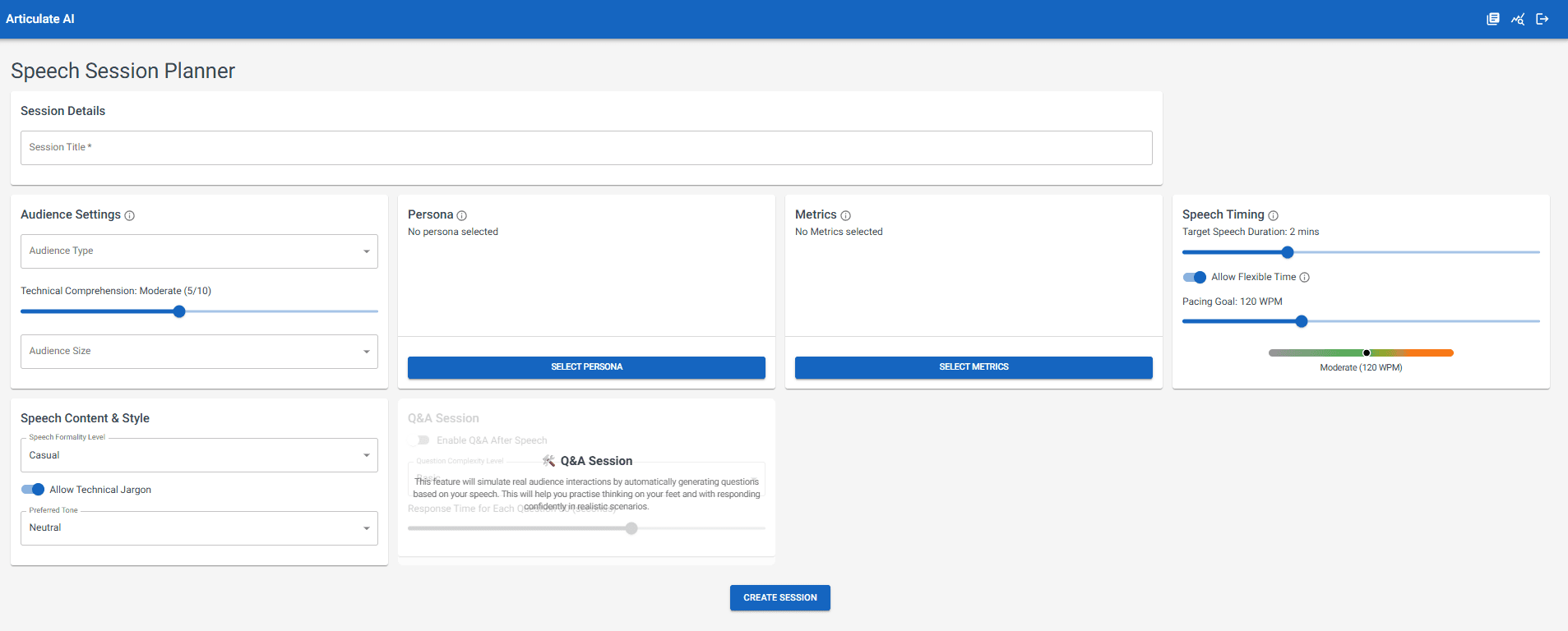
Audio is transcribed with Deepgram, then evaluated by GPT-4 against structured rubrics covering pacing, clarity, tone, structure, vocabulary, sentiment, and audience engagement.
Persona-based feedback workflows let users adapt their communication for different audiences, and every session produces a structured report combining objective speech metrics with qualitative improvement recommendations.
My role
Solo design and build: React frontend, Django backend, model integration, rubric design, and containerised deployment.
Outcome
A working end-to-end platform, and a proving ground for rubric-driven LLM evaluation. The same patterns, structured rubrics, persona-based feedback, and report generation, now run at production scale in my DialogicAI work.
Trade-offs
Two model calls per session, Deepgram then GPT-4, doubles both latency and cost per report. Splitting transcription from evaluation kept each stage swappable and easy to debug, but a user waits for both before seeing anything, and there is no partial result to show meanwhile.
There was no evaluation harness on the rubric outputs themselves. The system scored speech against rubrics but nothing scored the scorer, so a prompt change could silently shift grading with no regression signal. That gap is precisely what the evaluation work in DialogicAI was built to close, and it is the single most useful thing this project taught me.